We get the same questions every week, so we wrote the answers down in one place. This is the guide we wish every new Yorkie owner read before choosing a puppy, from any breeder.
Where Yorkies come from
The Yorkshire Terrier was developed in the mill towns of Yorkshire and Lancashire in northern England in the 1800s. Working people wanted a small, quick terrier to keep rats out of the mills and mines. Over time the breed got smaller and its long, silky coat made it a favorite companion dog, and it has been one of the most popular breeds in America for decades.
That history still shows. Under the bows and the soft hair is a real terrier: brave, curious and quick to sound the alarm.
Temperament: what living with a Yorkie is like
Yorkies bond hard with their people. They want to be in the same room as you, on the couch next to you and, if you allow it, in the bed. They are clever and learn fast, but they also have opinions. Short, upbeat, treat-based training works far better than being strict.
- Affectionate and loyal. Most Yorkies pick a favorite person and follow them everywhere.
- Alert. They will tell you about the mail carrier, the neighbor and the leaf that moved. Early training keeps the barking reasonable.
- Confident. A Yorkie often has no idea it is small. That is charming until it walks up to a German Shepherd, so supervision matters.
- Adaptable. They are equally happy in an apartment or a farmhouse, as long as they are with their people.
Size and growth
The breed standard says an adult Yorkie should weigh no more than 7 pounds. Most healthy Yorkies land between 4 and 7 pounds and stand about 7 to 8 inches at the shoulder. The best predictor of your puppy’s adult size is the weight of the parents, which is why we tell every family exactly what mom and dad weigh.
| Age | Typical weight | What’s happening |
|---|---|---|
| 8 weeks | 1.5 to 2.5 lbs | Old enough to go home after a vet check |
| 4 months | 2.5 to 4 lbs | Puppy vaccine series finishing |
| 6 months | 3.5 to 5.5 lbs | Adult teeth in, coat starting to change color |
| 12 months | 4 to 7 lbs | Close to adult size |
Why we don’t sell “teacup” Yorkies
You will see “teacup”, “micro” and “toy” Yorkies advertised everywhere. None of these is a real type of Yorkshire Terrier. They are sales words for unusually tiny dogs, and breeding for extreme smallness brings real risks: dangerously low blood sugar, fragile bones, liver shunts, dental crowding and a shorter life. A healthy Yorkie is already small. We breed for health and temperament inside the standard, and we would rather lose a sale than sell a puppy that is likely to suffer.
Coat and colors
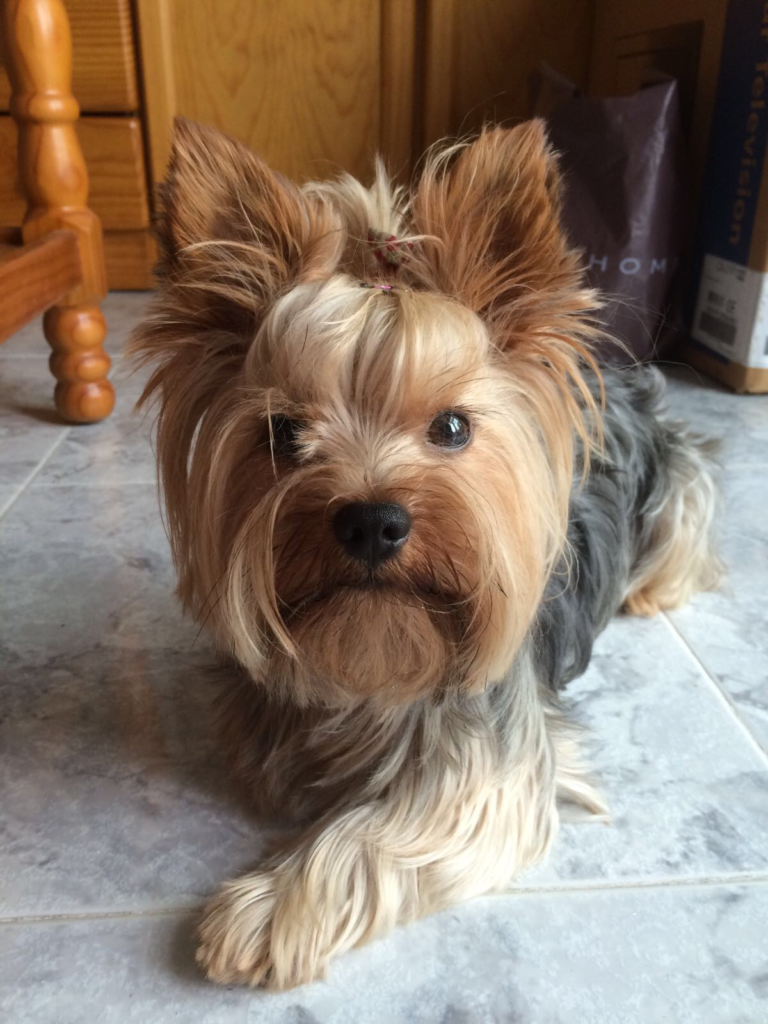
Yorkies are born black and tan. As they grow, the black slowly “breaks” to a steel blue and the tan lightens toward gold. The change can take one to three years, so a puppy’s color is only a preview.
- Black and tan: the puppy coat.
- Black and gold: a coat partway through the change.
- Blue and tan: the classic adult coat.
- Blue and gold: the fully matured adult coat.
Be careful with puppies sold as rare colors at premium prices. Unusual colors are not a sign of quality, and some come from mixed breeding.

Grooming
A Yorkie’s coat is hair, much like ours. It grows all the time and sheds very little, which is why many people with mild allergies do well with the breed. No dog is truly hypoallergenic, though, so spend time with a Yorkie before committing if allergies are a concern.
What grooming really looks like:
- Brushing three or four times a week to prevent mats.
- A bath every two to three weeks.
- A trim every six to eight weeks. Most pet owners keep a short “puppy cut” that is easy to care for.
- Daily tooth brushing. Small mouths crowd teeth, and dental disease is the most common Yorkie health problem.
- Nails trimmed every couple of weeks.

Health: what to watch for
Yorkies are generally long-lived, often reaching 11 to 15 years. These are the conditions good breeders screen for and good owners watch for:
- Patellar luxation: a kneecap that slips out of place. Parents should have their knees checked.
- Portosystemic liver shunt: abnormal blood flow around the liver. Bile acid testing helps screen for it.
- Tracheal collapse: weakening of the windpipe. Walk your Yorkie on a harness, never a collar.
- Hypoglycemia in young puppies: low blood sugar. Small, frequent meals prevent it. Signs are weakness, trembling and sleepiness.
- Eye problems: parents should have regular eye exams.
- Dental disease: preventable with daily brushing and yearly cleanings.
Ask any breeder, including us, to show you the parents’ health results before you pay anything.
Exercise and training
Yorkies need less exercise than people expect: a couple of short walks and some play indoors keeps most of them happy. Mental work matters as much as walks. Puzzle toys, short training games and new places to sniff will tire a Yorkie out faster than a long walk.
Potty training is the part that takes patience. Small bladders mean frequent trips out, and many owners use a pee pad or indoor potty area alongside outdoor training. We start this with our puppies before they leave, and we send every family home with our exact routine.
What a Yorkie costs
A Yorkie from health-tested parents usually costs a few thousand dollars. That price covers the parents’ health testing, vet care, vaccines, microchipping and weeks of round-the-clock care. After you bring your puppy home, budget for:
- Vet visits, remaining vaccines and spay or neuter.
- Grooming every six to eight weeks, or tools if you do it yourself.
- Good food, dental care, a harness, a crate and pet insurance.
A Yorkie listed far below normal prices is a warning sign. Puppy scams are very common online. A real breeder will talk to you on the phone, show you the puppy live on video, let you visit, and never pressure you into paying quickly by gift card or cash app.
Is a Yorkie right for you?
A Yorkie is probably a great fit if you want a close companion, you are home a lot or can take your dog along, you live in a smaller space, and you are happy to brush or pay a groomer.
Think twice if you have toddlers who might drop or squeeze a small puppy, you need a quiet dog, you are away from home ten or more hours a day, or you want a rugged hiking partner.
Still not sure? Send us a message. We would much rather talk you out of a Yorkie than place a puppy in a home that isn’t right for it.