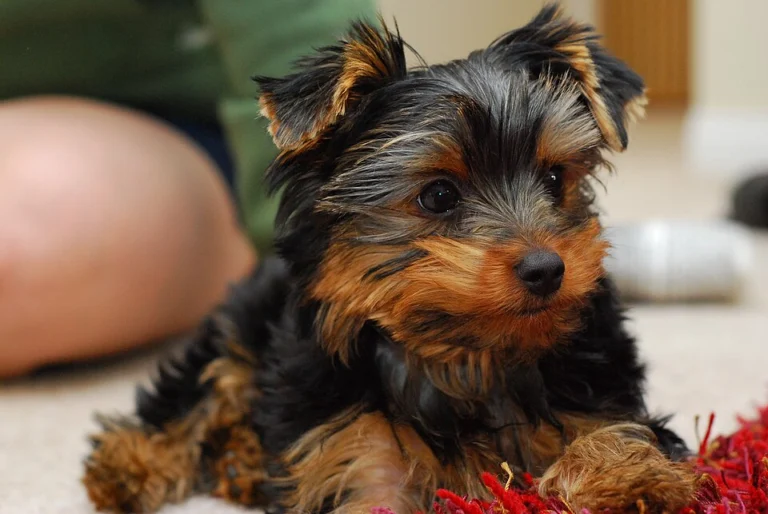
Almost every Yorkie puppy is born black and tan. Over the next one to three years, the black part of the coat usually lightens to a steel blue and the tan turns to a rich gold. That is why a Yorkie puppy and its adult self can look like two different dogs. This guide explains the standard Yorkie colors, the timeline of the change, and what to know before paying extra for a “rare” color.
The four standard Yorkie colors
The American Kennel Club registers Yorkshire Terriers in four standard color combinations:
- Black and tan, the color of nearly all young puppies
- Black and gold
- Blue and tan
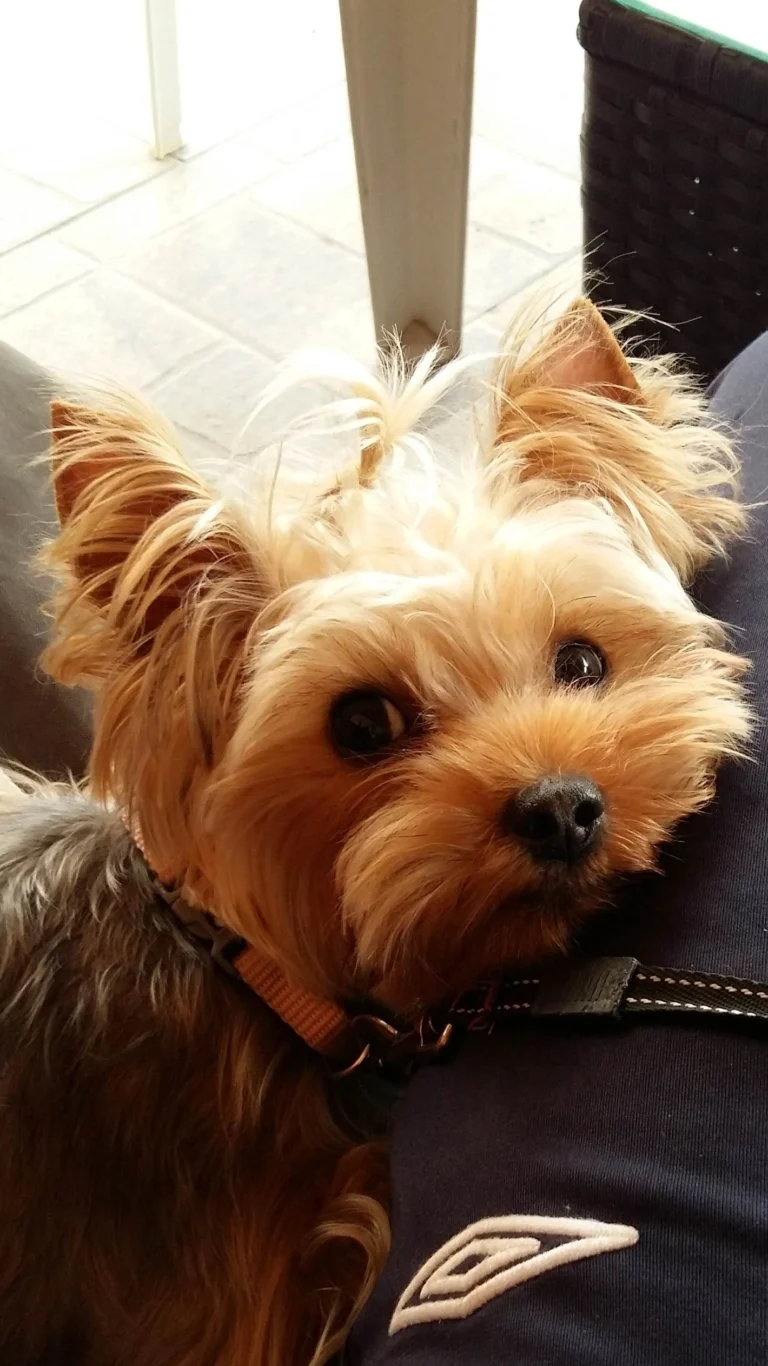
- Blue and gold, the classic adult show coat
The breed standard describes the ideal adult as a dark steel blue (not silver) from the back of the head to the tail, with a rich golden tan on the head, chest and legs.
When do Yorkies change color? Age-by-age color chart
Most Yorkies start to change color between 3 and 6 months old, and the adult coat settles somewhere between 1 and 3 years. This Yorkie color chart shows what you will usually see at each stage.
| Age | What you will usually see |
|---|---|
| Birth to 3 months | Mostly black, with tan on the face, eyebrows, chest and legs. |
| 3 to 6 months | Tan areas start to lighten. On many puppies the hair near the skin on the head begins turning golden. |
| 6 to 12 months | The head becomes noticeably gold. The black on the body may start to show blue or gray at the roots. |
| 1 to 3 years | The adult color settles. Some Yorkies are fully blue and gold by their first birthday; others take until age two or three. |
Every Yorkie is different. Some stay darker for life, and coat texture plays a part: a fine, silky coat tends to clear to steel blue, while a thicker, cottony coat often stays darker. Looking at the parents is the best clue to how a puppy will turn out.
Parti, chocolate, merle and other “rare” colors
You will see Yorkies advertised in colors outside the standard, often at a higher price. Here is what those labels usually mean:
- Parti-color: white combined with blue or black and tan. It comes from a recessive gene that has existed in the breed for a long time. Parti Yorkies can make lovely pets, but the color is not part of the AKC show standard.
- Chocolate or liver: brown in place of black. Its origin is debated, so ask the breeder for the parents’ registration and DNA results.
- Golden or “blonde”: usually a very light coat. Ask the same questions as with chocolate.
- Merle: the merle gene is not native to the Yorkshire Terrier, so a merle “Yorkie” points to another breed somewhere in the pedigree. Breeding two merle dogs together also carries a risk of deafness and eye problems.
Color does not change a Yorkie’s personality, and a standard-colored Yorkie is no less of a dog. If a breeder charges more for a rare color, ask for registration papers and DNA results for both parents and read them yourself.
Do chocolate and parti Yorkies change color?
Parti Yorkies: the white patches stay white. The colored patches go through the same change as any Yorkie, so black areas usually soften toward blue and tan areas toward gold.
Chocolate Yorkies: the brown coat often lightens as the puppy grows, but it does not turn steel blue the way a black coat does. How much it changes varies from dog to dog, so the adult parents are the best guide.
How to know what color your puppy will be
- Look at both parents’ adult coats.
- Ask for recent photos and a live video of the puppy, not only photos from a few weeks ago.
- Feel the coat texture if you can. Silky hair usually means a lighter adult color.
Want to read more about the coat itself? See our Yorkie haircuts and grooming guide and whether Yorkies are hypoallergenic.
See our puppies’ colors
You can see each puppy’s coat on our available Yorkie puppies page, including Dolly and Peanut. Ask for a recent video of any puppy before you decide, so you see the coat as it is today.